
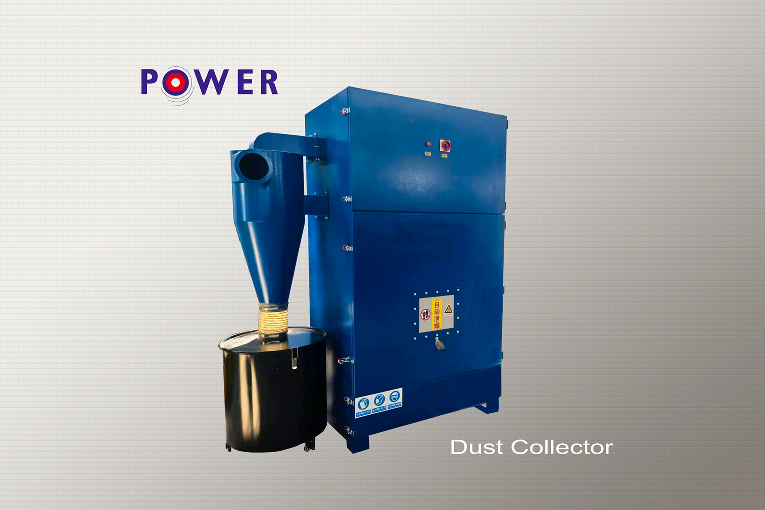
Rubber rollers are critical components in a wide range of industrial sectors, including textile manufacturing, printing, office automation equipment, and materials processing. During both the production of new rollers and the re-grinding of worn ones, the grinding process inevitably generates substantial quantities of fine rubber dust and particulate matter. Unlike metal grinding, where cooling fluids are commonly used to suppress dust, rubber roller grinding typically operates dry, which allows rubber dust to disperse freely into the surrounding air. This creates significant workplace hazards, equipment maintenance challenges, and product quality concerns. Dust collectors have therefore become an indispensable auxiliary system for rubber roller grinding machines, serving to capture, filter, and safely dispose of grinding dust.
The Necessity of Dust Collection
The rubber dust produced during roller grinding is not merely a nuisance—it presents serious operational and health risks. Rubber dust particles are typically fine and lightweight, allowing them to remain airborne for extended periods and settle on machine surfaces, electronic components, and finished products. In textile mills, where rubber rollers are ground and re-ground repeatedly, the cumulative dust load can be substantial. Prolonged exposure to rubber dust is associated with respiratory diseases, including pneumoconiosis, making worker health protection a primary driver for dust collection system adoption.
Beyond health concerns, accumulated rubber dust on grinding machine ways, guides, and workholding fixtures can compromise grinding accuracy and surface finish quality. Furthermore, rubber dust is combustible; in confined spaces with sufficient oxygen and ignition sources, dust accumulation presents a genuine fire hazard. Dust collectors mitigate these risks by continuously removing dust at the source.
Operating Principles of Dust Collection Systems
Dust collection systems for rubber roller grinding machines typically operate on the principle of localized extraction combined with multi-stage filtration. A typical system consists of a dust-collecting hood positioned in close proximity to the grinding wheel-workpiece interface, a suction fan or blower that creates negative pressure, ductwork conveying the dust-laden air, and one or more filtration or separation stages.
The dust-collecting hood is strategically placed around the grinding area to capture dust at its point of generation before it can disperse. High-pressure centrifugal fans generate the suction force required to overcome system resistance and transport dust particles through the ductwork. The collected air stream then passes through filtration media—which may include cyclone separators, filter bags, cartridge filters, or even wet scrubbers—where solid particles are separated from the air stream. Advanced systems may incorporate multiple filtration stages to achieve near-zero particulate emissions.
Key Functions of Dust Collectors
The primary functions of dust collectors in rubber roller grinding applications can be summarized as follows:
Source Capture and Containment: By extracting dust directly at the grinding point, dust collectors prevent the widespread dispersion of rubber particulates throughout the workshop. This maintains workplace cleanliness and protects other machinery from dust contamination.
Air Quality Protection: Filtration systems remove airborne particulates before air is recirculated or exhausted, protecting operator respiratory health and ensuring compliance with occupational exposure limits.
Process Stability: By continuously removing grinding debris from the work zone, dust collectors prevent the re-deposition of particles on the roller surface, which could otherwise cause surface defects or compromise dimensional accuracy.
Fire Risk Reduction: The removal and contained storage of combustible rubber dust significantly reduces the potential for dust explosions or fires.
Equipment Longevity: Keeping grinding machine components free of abrasive rubber dust reduces wear on moving parts and extends maintenance intervals.
Types of Dust Collection Systems
Several dust collector configurations are employed in rubber roller grinding applications, each suited to different production scales and requirements. Cyclone separators use centrifugal force to separate larger particles from the air stream and are often used as pre-filters. Baghouse or cartridge collectors employ fabric or pleated filter media to capture fine particulates, with some systems achieving filtration efficiencies of 99% or better for sub-micron particles. Wet scrubbers pass dust-laden air through water, capturing particles in the liquid phase—an approach particularly effective for sticky or hygroscopic dusts. Some systems combine multiple technologies, such as cyclone pre-separation followed by bag filtration, to optimize performance across a range of particle sizes.
Practical Applications and Industry Examples
Dust collectors are widely deployed across industries that rely on rubber roller grinding. In textile spinning mills, where large numbers of rubber rollers must be reground regularly, dedicated dust collection systems are integrated with roller grinding machines to maintain clean working environments. In the printing industry, where precision-ground rubber rollers are essential for quality ink transfer, dust collectors help achieve the surface finish requirements while protecting operator health. Office equipment manufacturers grinding rollers for copiers and printers have developed specialized three-stage filtration systems that include dust collection, filter box filtration, and water scrubbing to achieve zero-dust emissions.
Commercial dust collector products designed specifically for rubber roller grinding applications offer features such as 24-hour continuous operation capability, high suction power, large dust storage capacity, and filtration down to 0.1 micron particle size. Some systems include temperature alarms and automatic water spray systems to mitigate fire risk when temperatures exceed set thresholds.
Conclusion
Dust collectors play an essential role in rubber roller grinding operations, addressing the critical challenges of worker health protection, process quality assurance, equipment maintenance, and fire safety. As industrial hygiene regulations become more stringent and production quality requirements continue to rise, the integration of effective dust collection systems with rubber roller grinding machines will remain a fundamental requirement of responsible manufacturing practice. The ongoing development of more efficient filtration media, smarter control systems, and more compact equipment designs promises to further enhance the effectiveness and accessibility of dust collection technology in this important industrial application.
Post time: Jul-27-2026