
Featured Calendering & Rubber Processing Equipment
Explore our premium machinery designed specifically for the preparation, precision covering, grinding, and maintenance of rubber rollers utilized in textile calendering applications. These advanced units guarantee optimal nip pressure, thermal stability, and long service life.
The Crucial Role of Rubber Roller Covering in Textile Calendering
Textile calendering is a mechanical finishing process performed at the final stage of fabric production. It subjects textiles to high temperature and pressure under a nip created between two or more rollers. The primary purpose is to flatten the yarns, enhance the fabric density, produce a smooth, lustrous, or embossed surface finish, and reduce air permeability. Within this setup, the rubber roller covering plays a pivotal role.
Unlike metal rollers, which are rigid and unyielding, a rubber-covered roll serves as the resilient counter-roller. This resilience is critical because it determines the width of the nip zone and ensures uniform pressure distribution across the entire fabric width. Any slight variation in density, thickness, or alignment of the incoming fabric is cushioned by the elastic deformation of the rubber cover, preventing uneven finishing, fabric tearing, or localized burning. Consequently, the formulation, application, and finishing of the rubber roller covering dictate the quality, speed, and reliability of the entire calendering process.
Industrial Status & Market Dynamics
The global textile finishing sector is undergoing rapid transformation, driven by demand for technical textiles, high-performance sportswear, and eco-friendly processing. Modern calendering lines operate at speeds exceeding 150 meters per minute, with nip pressures reaching up to 300 N/mm and temperatures soaring to 200°C. These extreme operating environments place immense thermal and mechanical stress on rubber roller coverings.
Currently, the market is experiencing a shift away from traditional natural rubber and simple neoprene coverings toward advanced synthetic elastomers like EPDM, Hydrogenated Nitrile (HNBR), Silicone, and Polyurethane. Manufacturers require coverings that can maintain structural integrity, resist swelling from finishing chemicals, and endure continuous thermal cycles without cracking, delaminating, or losing their durometer hardness. Additionally, the rise of custom embossing finishes requires rollers with exceptional structural memory and abrasion resistance.
Technological Development Trends
The integration of Industry 4.0 and smart manufacturing technologies is reshaping the rubber roller processing industry. The modern production paradigm demands not just high-quality materials, but also extreme dimensional precision. This has accelerated the adoption of CNC cylindrical grinders, automated strip-winding covering machines, and computerized testing devices.
Furthermore, there is a growing trend toward "Smart Rollers" embedded with thermal and pressure sensors. These sensors monitor the nip conditions in real-time, sending data back to the control system to prevent thermal runaway—a major cause of rubber cover failure. To support these smart systems, the manufacturing machinery must achieve sub-micron accuracy, which is why state-of-the-art CNC grinding and measuring devices have become standard assets for modern roller production plants.
⚙️Key Performance Metrics for Textile Calendering Rollers
To withstand the harsh environment of textile finishing, a premium rubber roller covering must achieve a balance of three critical properties: Thermal Stability (resisting degradation at high temperatures), Dynamic Deflection Recovery (maintaining elasticity under high-speed compression), and Chemical Inertness (resisting softeners, optical brighteners, and sizing agents).
In-Depth Application Scenarios in Textile Finishing
Different textile materials and finishes require specialized calendering configurations. Below, we analyze how rubber roller coverings are tailored for specific industrial applications:
1. Schreiner Calendering
Schreiner calendering is used to produce a silk-like luster on cotton, satin, and synthetic lining fabrics. The metal roller is engraved with very fine diagonal lines (up to 12 lines per mm). The rubber counter-roller must have a highly uniform hardness, typically between 85 to 95 Shore A, to press the fabric deep into the micro-grooves without damaging the delicate engraving. High thermal resistance is vital as the process uses high heat to thermofix the luster.
2. Embossing Calendering
Embossing creates three-dimensional patterns on fabrics, non-wovens, and synthetic leathers. Here, the rubber roller covering acts as the female matrix or backing roll. It must possess excellent elastic recovery (resilience) so that it deforms under the pressure of the male engraved steel roll and immediately springs back to its original shape. Polyurethane and specialized silicone coverings are preferred due to their high tear strength and structural memory.
3. Glazing and Friction Calendering
To achieve a high-gloss, polished surface on fabrics, friction calendering runs the heated steel roll at a speed faster than the fabric and the backing rubber roll. This differential speed creates intense shear stress and friction at the nip. The rubber covering must have an exceptionally strong bond to the metal core to prevent delamination, along with superior surface abrasion resistance to withstand the continuous sliding friction.
Company Profile
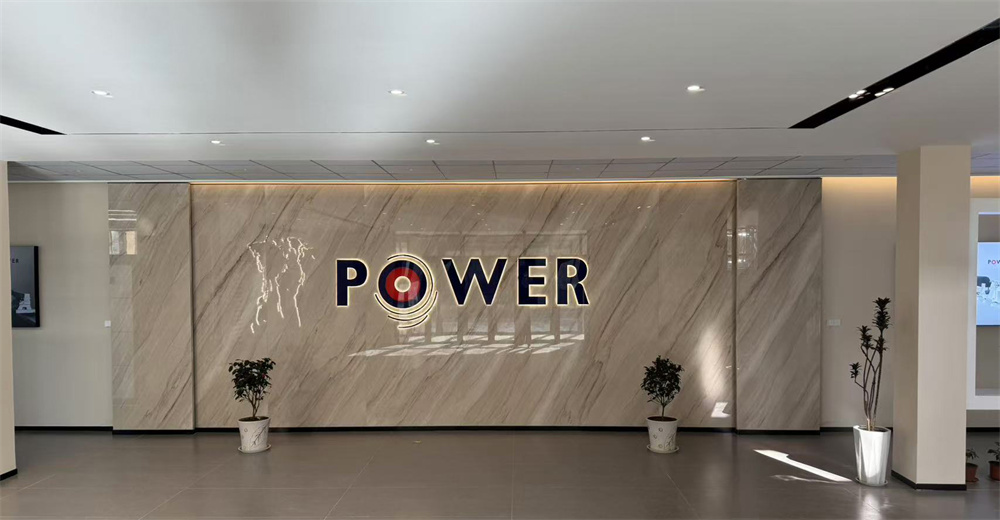
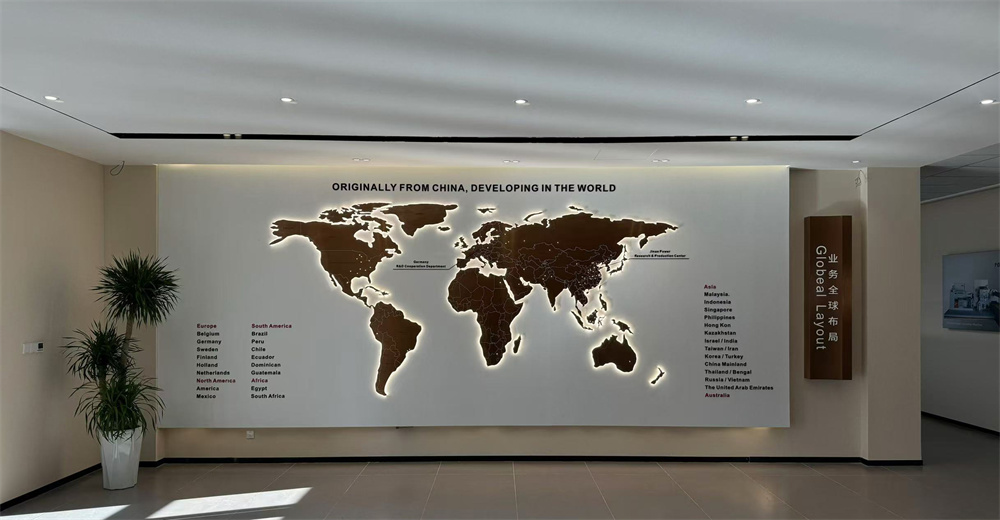
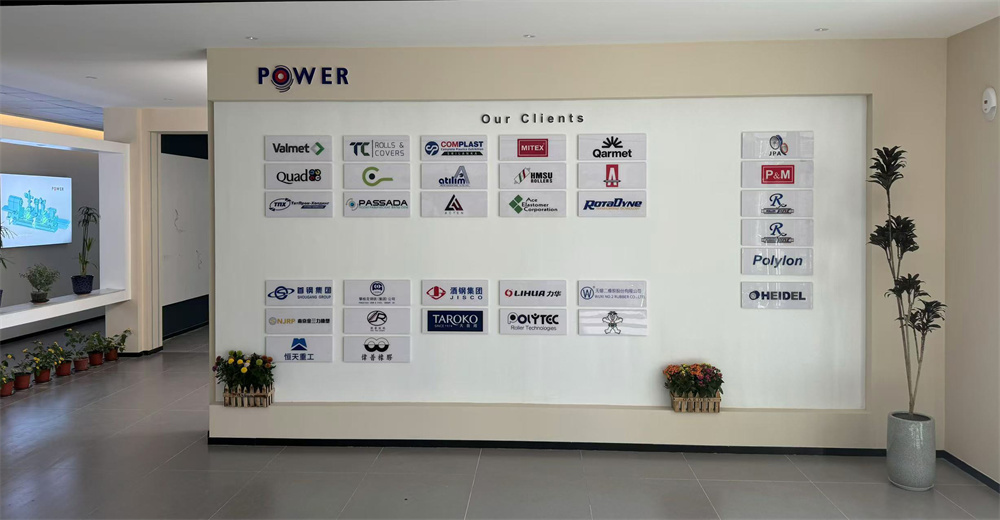
Jinan Power Roller Equipment Co., Ltd. is a professional manufacturer of modern rubber roller equipment integrating scientific research and production. Founded in 1998, the company is the main base for the production of special equipment of rubber rollers in China. Over the past 20 years, the company has not only devoted all its energy to the R&D and manufacturing of equipment, but also constantly researching more perfect production technology.
In recent years, our company are also making contribution to intelligent manufacturing in the rubber roller industry. The Industry 4.0 mode will be applied in our rubber roller production in the near future. Our new generation of rubber roller equipment provides a good platform for intelligent manufacturing. The interconnection between production managers and field operators, data sharing, recording and inspection can be achieved through the operation platform of the equipment, creating good conditions for various control in production.
Our company is supplying rubber roller manufacturers with highly accurate, durable and productive equipment. Our main products including: Rubber Roller Stripping Machine, CNC Grinding/Grooving Machine, CNC Cylindrical Grinder, Rubber Roller Covering Machine, Rubber Roller Polishing Machine, Professional Measuring Instrument, Etc.
In 2000, our products passed the inspection by CCIB Quality Certification Center in accordance with ISO 9001 standards. By using our equipment, you will increase processing efficiency, and raise product quality. Also it can bring much economical benefit.


Intelligent CNC Solutions for Calender Roller Processing
To achieve the precise geometry required for textile calendering, manual processing is no longer sufficient. Rollers must have a perfect crown (parabolic or cosine profile) ground into their surface to offset the structural deflection that occurs when the roller is loaded under high pressure. Jinan Power Roller Equipment provides a complete suite of specialized machinery to automate and refine this process:
Stripping & Covering Technology
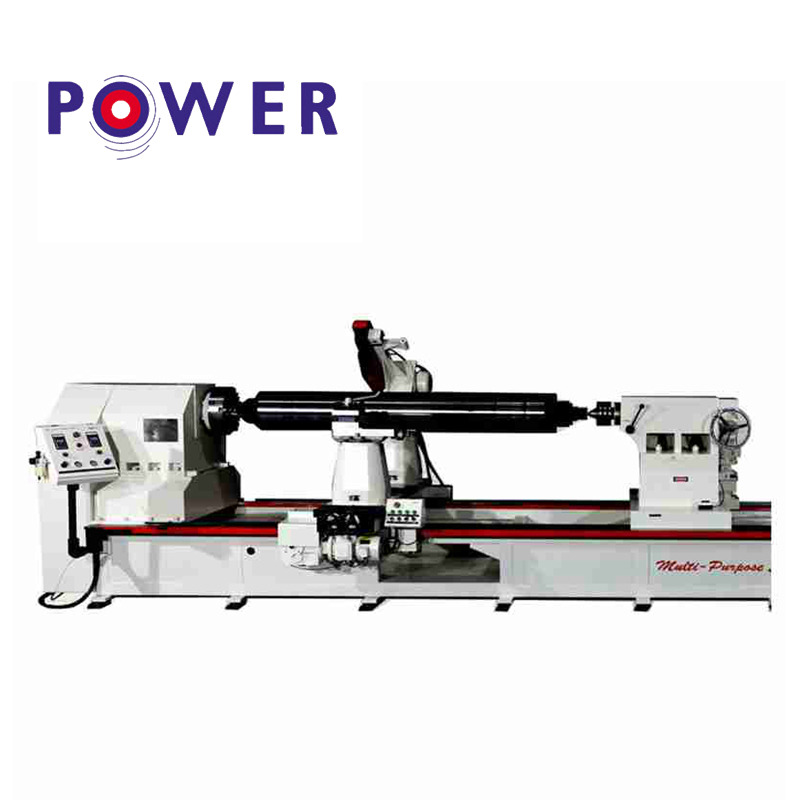
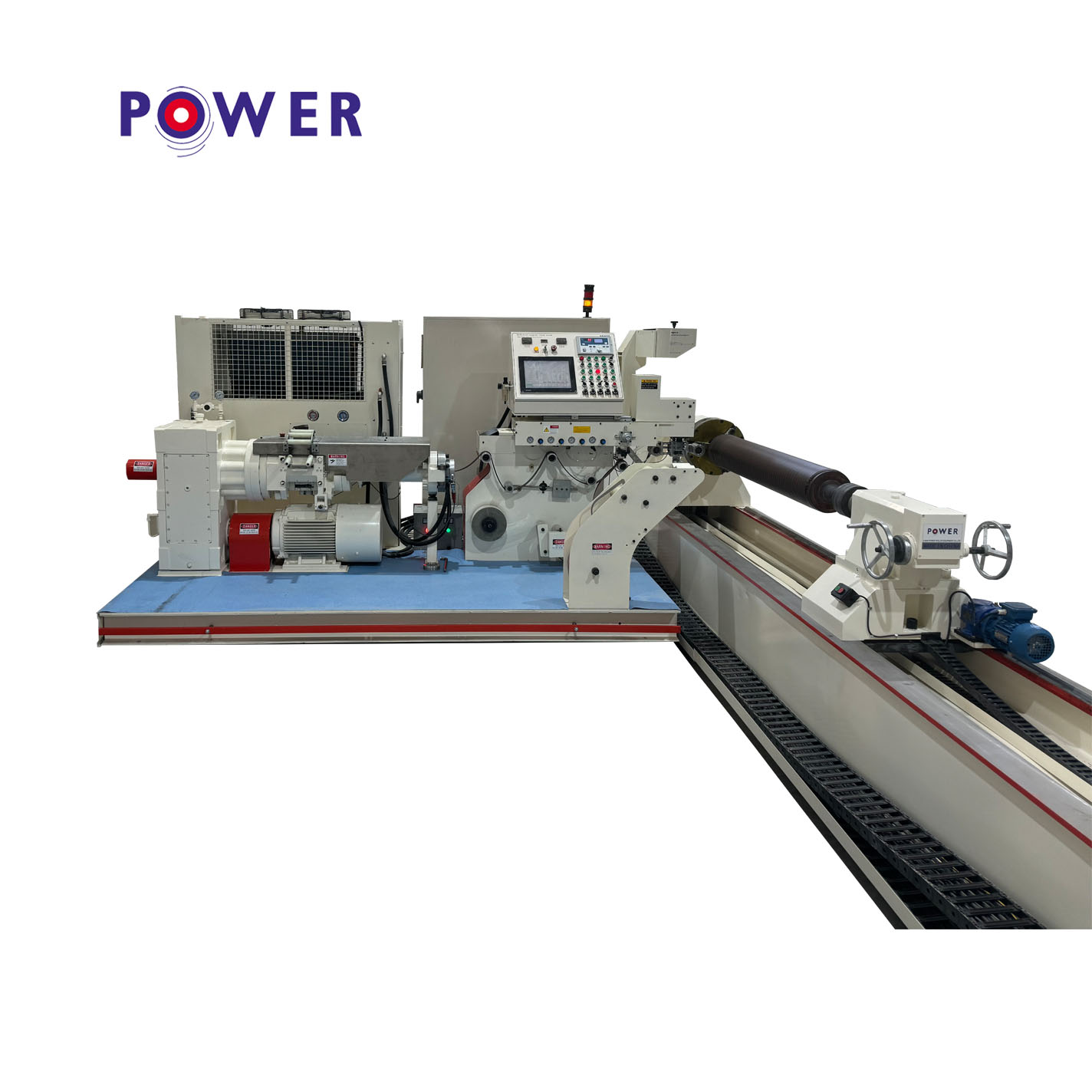
Before a new rubber cover can be applied, the old degraded rubber must be stripped efficiently without damaging the steel core. Our Rubber Roller Multi-purpose Stripping Machine automates this task, saving hours of manual labor and ensuring a clean core surface. Following core preparation and adhesive application, the Rubber Roller Covering Machine applies the rubber compound using continuous strip-wrapping extrusion. This method eliminates air pocket entrapment and guarantees a homogenous rubber layer free from internal voids, which is critical for preventing high-temperature blowouts during calendering.
CNC Grinding, Polishing & Quality Control
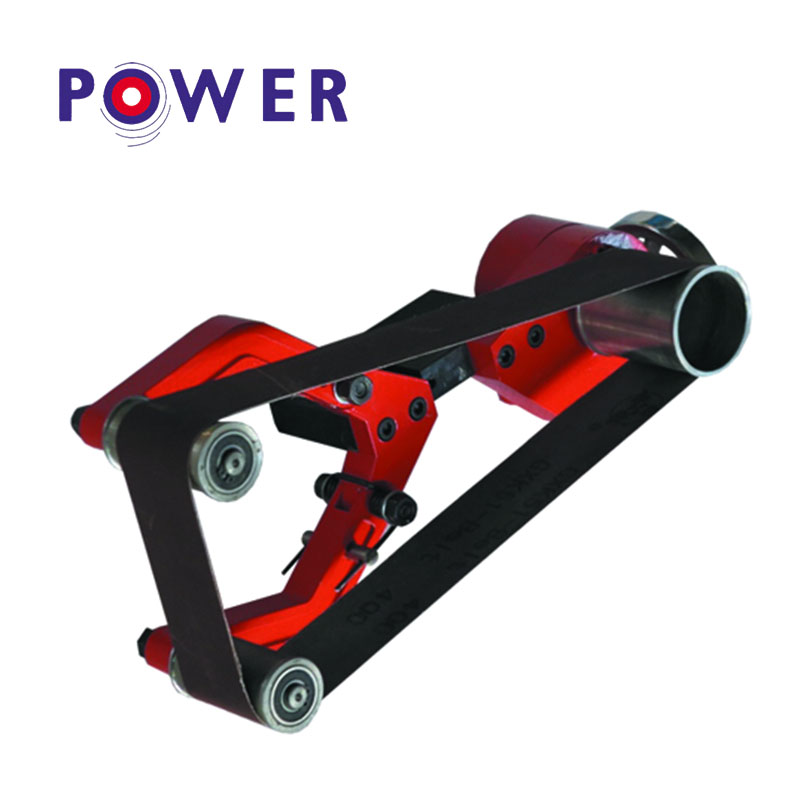
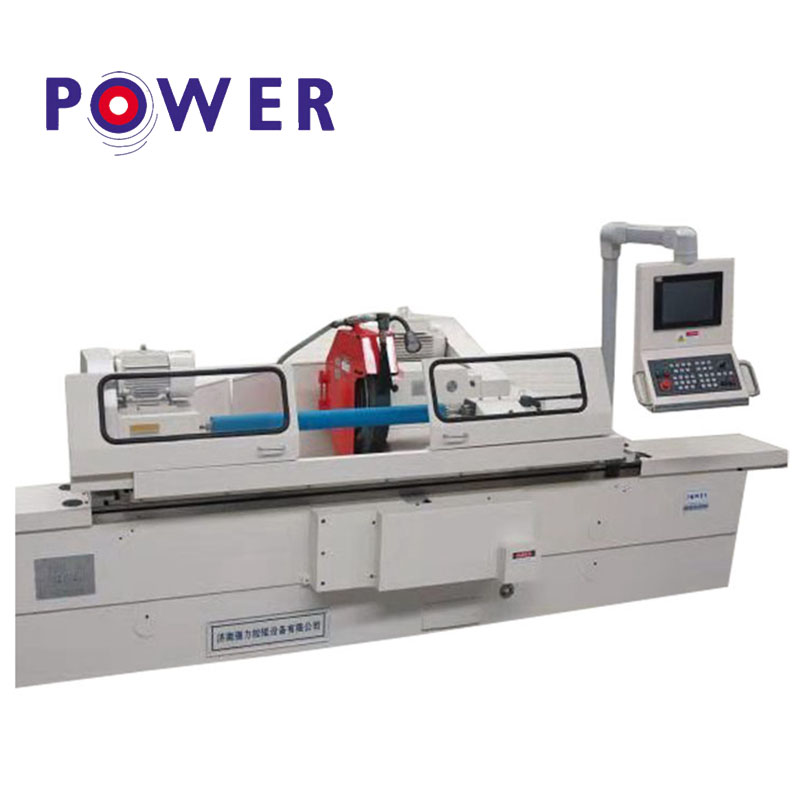
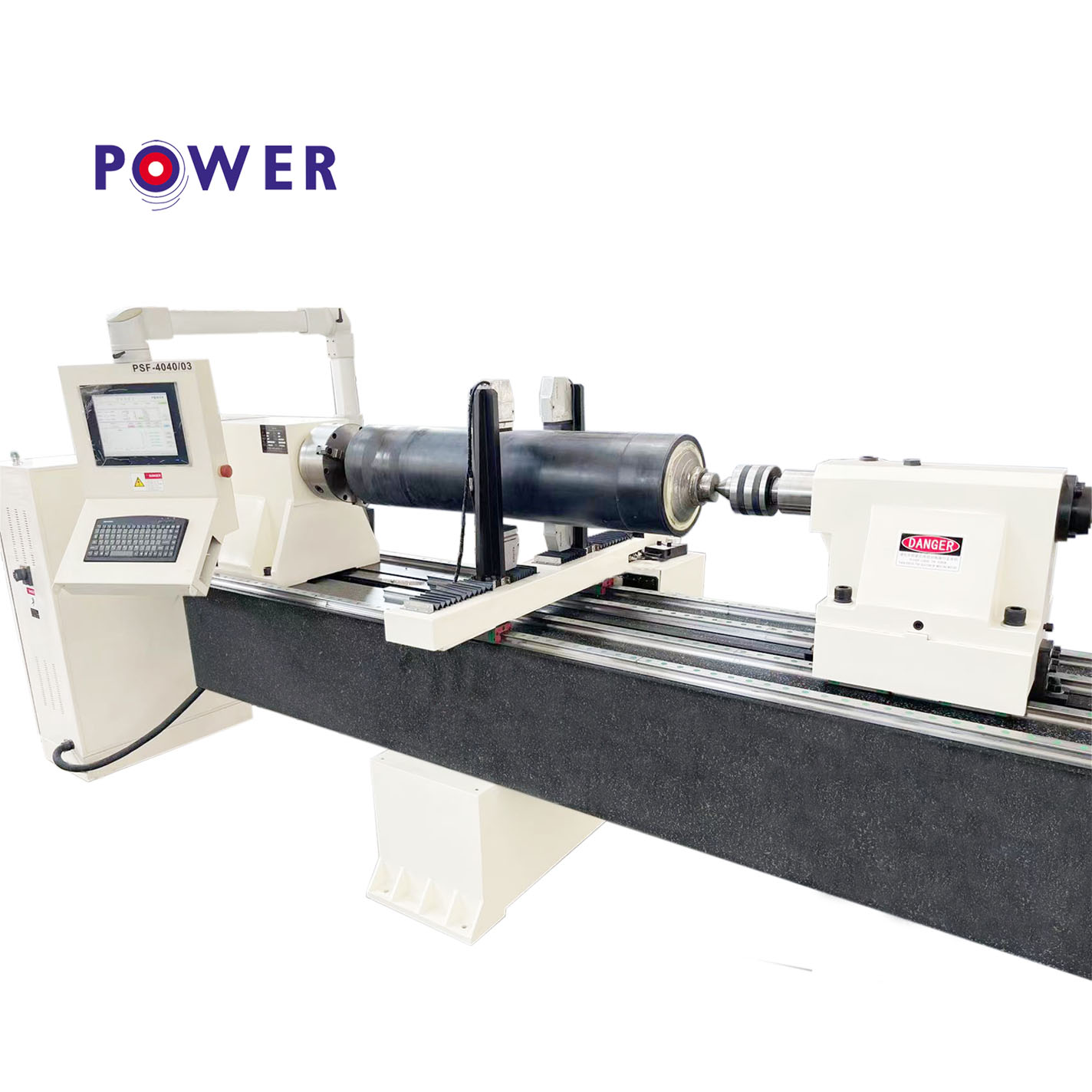
Once vulcanized, the roller must be finished to precise tolerances. Our CNC High Precision Cylindrical Grinding Machine operates with state-of-the-art programming to grind custom profiles and grooving patterns. This is followed by the Sand Belt Polishing Device, which achieves a mirror-like surface finish, essential for preventing surface marks on delicate fabrics. Finally, the Rubber Roller Measuring Machine provides digital inspections, recording diameter variations, runout, and profiles to ensure every roller meets strict textile standards before installation.
💡Customized Solutions for Specialized Industries
Different industries, specifications, and production needs require different equipment to meet your technics, so customized solutions are crucial. Let's do it for you. Jinan Power Roller Equipment integrates your operational parameters (speed, temperature, pressure, chemical exposure) to configure the ultimate roller manufacturing line.
Complete Product Range for Rubber Roller Production
Discover our full catalog of equipment designed to cover, grind, polish, and measure rubber rollers for calendering and other industrial applications.
-

WeChat
WeChat

-

Watsapp
Watsapp

-

TEL
-

E-mail