
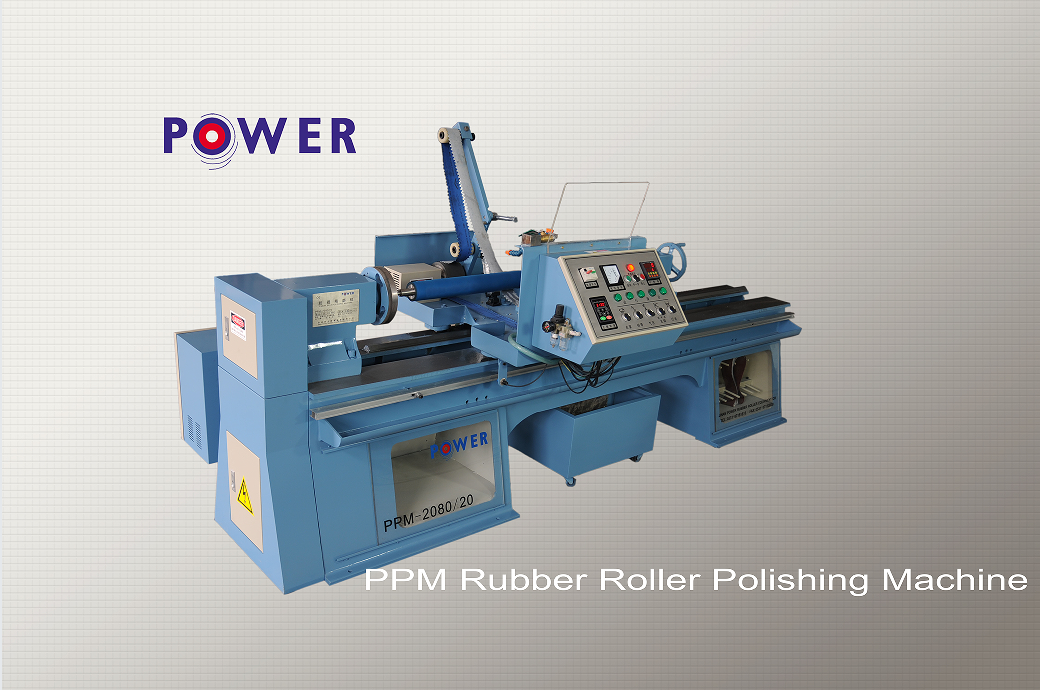
In the diverse landscape of industrial manufacturing, the quality of a rubber roller directly influences the efficiency and output of production lines, from printing and packaging to textiles and laminating. Over time, rubber rollers wear down, develop glaze, or suffer from uneven surfaces. This is where the Rubber Roller Polishing Machine becomes an indispensable asset. Designed specifically for precision finishing, this machine restores the surface of rubber rollers to an immaculate state, ensuring optimal friction, ink transfer, and material handling.
A rubber roller polishing machine is essentially a specialized lathe equipped with a high-speed grinding and polishing head. Unlike general-purpose grinders, it is engineered to handle the unique elasticity and heat sensitivity of rubber compounds. The primary function is not merely to remove material, but to create a perfectly cylindrical, smooth surface with a specific micro-finish. The machine typically consists of a heavy-duty bed, a headstock and tailstock for mounting the roller, a variable-speed drive system, and a polishing carriage that moves along the roller’s axis. The polishing unit uses fine-grit abrasive tapes, stone wheels, or non-woven nylon brushes to achieve a mirror-like finish without burning or tearing the rubber.
Key Applications
These machines are critical in several industries:
· Printing: Restoring ink and dampening rollers to prevent ghosting and ensure uniform ink distribution.
· Packaging: Refining glue application rollers for laminating and adhesive coating processes.
· Paper Mills: Maintaining rollers that transport and treat paper, avoiding surface marks.
· Textile: Polishing rollers that guide delicate fabrics without snagging or uneven tension.
By eliminating surface irregularities, grooves, and glazing, a properly polished roller increases the lifespan of the roller itself and the machinery it operates in.
—
Essential Maintenance Procedures
To preserve the accuracy and longevity of a rubber roller polishing machine, a strict maintenance schedule is paramount. Neglect leads to vibration, poor finish quality, and costly repairs. Below is a systematic guide to maintaining this precision equipment.
1. Daily Cleaning Routine
Rubber dust, abrasive residue, and old compound particles accumulate quickly. After each use:
· Vacuum or Brush Away Debris: Use an industrial vacuum with a fine filter to collect rubber dust (which is highly flammable). Never use compressed air, as it can drive particles into moving parts and create a fire hazard.
· Wipe Down the Bed: Clean the guideways and the main bed using a lint-free cloth with a mild, non-petroleum-based solvent. custom roller coating machine suppliers,Avoid any solvent that can degrade rubber if it contacts the roller later.
· Inspect the Coolant/Lubricant System: If the machine uses a coolant or lubricant mist for heat control, rubber rollers manufacturer,check the fluid level and cleanliness. Replace contaminated fluid immediately.
2. Lubrication Schedule
Proper lubrication reduces friction and wear on bearings, lead screws, and sliding mechanisms.
· Guideways and Lead Screws: Apply a high-quality way oil (ISO VG 68 or as specified) every 40 operating hours. Wipe away old oil and rubber sludge before applying fresh lubricant.
· Headstock Bearings: Check the manufacturer’s recommendations—most sealed bearings require no regular greasing, but unsealed bearings need a lithium-based grease every 500 hours.
· Tailstock Quill: Clean and lightly oil the tailstock center and quill assembly weekly to prevent seizing.
3. Abrasive and Contact Wheel Maintenance
The polishing medium is the heart of the operation.
· Abrasive Tape/Stone Inspection: Before each use, examine the abrasive belt or stone for tears, uneven wear, or clogging. Replace a worn belt immediately to avoid burning the rubber roller or creating a harmonic vibration.
· Dressing the Stone: If using a vitrified or resin-bonded stone wheel, dress it regularly with a diamond dressing tool to restore concentricity and expose fresh abrasive grit. A loaded (clogged) stone generates excessive heat.
· Non-Woven Nylon Brushes: Clean these with a specialized brush rake or a stiff nylon brush to remove built-up rubber residue.
4. Precision Alignment Checks
A polishing machine is only as good as its alignment. Monthly checks should include:
· Tailstock Alignment: Mount a test bar between centers and use a dial indicator to ensure the tailstock is perfectly coaxial with the headstock. Misalignment by even 0.01 mm will result in a tapered roller.
· Carriage Travel: Verify that the polishing carriage moves parallel to the roller axis. Adjust gibs and preload settings as needed to remove any play.
5. Electrical and Drive System Care
Modern polishing machines often feature variable-frequency drives and digital controls.
· Keep Panels Sealed: Ensure control cabinet doors are closed and gaskets are intact to keep out conductive rubber dust.
· Check Drive Belts: For machines with belt-driven spindles, inspect the drive belt for cracks or glazing every 200 hours and tension it according to the manual.
6. Long-Term Storage and Shutdown
If the machine will be idle for more than a week:
· Apply a thin layer of rust-preventive oil to all exposed metal surfaces (beds, chucks, centers).
· Release tension on all abrasive belts or back the polishing stone away from the rest position to prevent flat spots on contact wheels.
· Cover the entire machine with a breathable dust cover—never use plastic, as it traps moisture.
Safety Note: Always disconnect power before performing any cleaning or lubrication. Rubber dust is combustible; maintain a clean work area and have a suitable fire extinguisher (Class D for metal/rubber fires) nearby.
Conclusion
The rubber roller polishing machine is a precision tool that rewards meticulous care with decades of reliable service. By adhering to a disciplined routine of daily cleaning, regular lubrication, alignment verification, and proper abrasive management, operators can ensure that every polished roller meets exacting surface finish standards. A well-maintained machine not only produces superior results but also minimizes downtime and maximizes the return on investment. In the high-stakes world of continuous production, the health of your polishing machine directly reflects the quality of your final product.
Post time: Jun-03-2026