
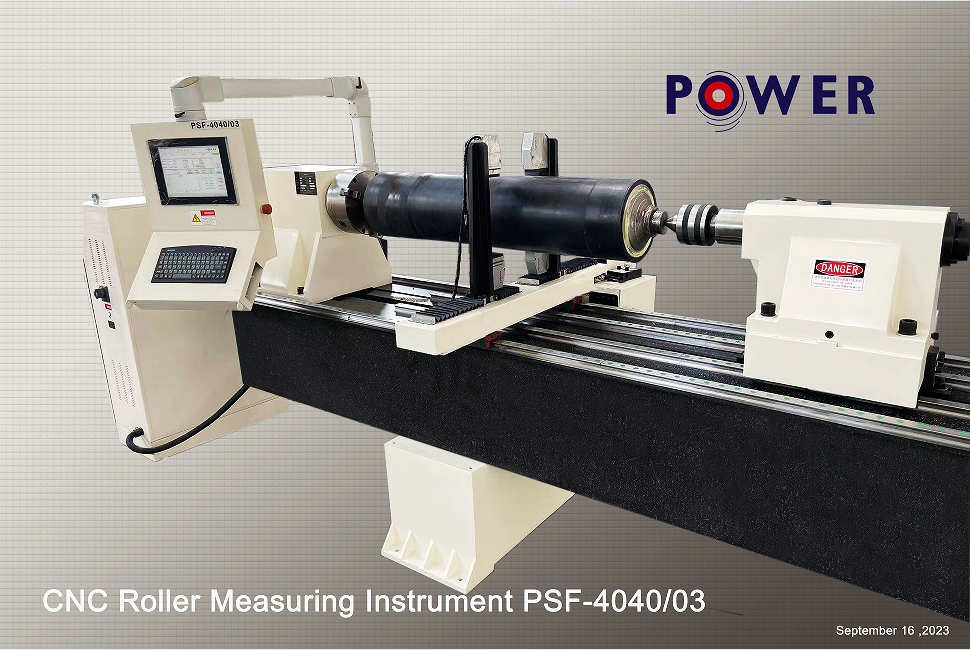
Rubber rollers are critical components in numerous industrial processes, spanning printing, paper manufacturing, textiles, and converting. Their performance—dictated by parameters like hardness, diameter, concentricity, surface quality, and temperature resistance—directly impacts product quality, operational efficiency, and machine longevity. Consequently, precise and reliable inspection is paramount. Modern rubber roller inspection instruments provide comprehensive, non-destructive evaluation solutions, ensuring rollers meet exacting specifications throughout their lifecycle.
Key Inspection Instruments and Their Functions
A suite of specialized instruments is employed for thorough assessment:
1. Hardness Testers: These are fundamental devices for measuring Shore A (or occasionally Shore D) hardness. Portable durometers provide quick, on-site checks to ensure the roller compound meets specifications and has been cured correctly. Variations in hardness across the roller surface can indicate improper vulcanization, wear, roller covering rubber fabric,or aging.
2. Surface Profilers and Roughness Analyzers: These instruments quantitatively measure the micro-geometry of the roller surface. Using contact (stylus-based) or non-contact (optical/laser) methods, they generate precise data on parameters like average roughness (Ra),rubber roller machine price, peak count, and waviness. This is vital for applications like printing, where ink transfer uniformity is controlled by surface texture.
3. Out-of-Roundness and Concentricity Gauges: Precision rotational measurement systems assess the roller’s geometric accuracy. Mounted between centers or in a rotary fixture, a high-resolution displacement sensor traces the surface as the roller rotates. The software calculates deviations from perfect roundness, concentricity to bearing journals, and barrel or taper profiles. This ensures smooth, vibration-free operation and uniform pressure across its width.
4. Diameter and Length Measurement Systems: Laser micrometers and optical scanning systems offer high-accuracy, non-contact measurement of outer diameter (OD) along the roller’s length. This verifies dimensional tolerances and monitors wear or swelling over time.
5. Thermal Imaging Cameras: Infrared cameras visualize temperature distribution across the roller surface during operation. Hotspots can indicate excessive friction, internal delamination, or cooling system failures, enabling predictive maintenance before catastrophic failure.
6. Ultrasonic Flaw Detectors: These devices use high-frequency sound waves to detect internal defects such as voids, porosity, bonding failures between the rubber layer and the metal core, or cracks that are not visible on the surface.
7. Advanced 3D Scanning Systems: For complete geometric characterization, 3D scanners capture the entire surface topography,high precision cnc cylindrical grinders, creating a digital twin for comparison against CAD models, analyzing complex wear patterns, or reverse engineering.
Application Workflow and Benefits
The application of these instruments follows a logical workflow across the roller’s lifespan:
· Incoming Inspection: Verifying the specifications of new or re-covered rollers before installation.
· Preventive and Predictive Maintenance: Scheduling re-grinding or replacement based on periodic checks of hardness, surface condition, and geometry, rather than on a fixed timetable.
· Troubleshooting: Diagnosing the root cause of production issues like streaking in printing, uneven coating thickness, or machine vibration by correlating process defects with specific roller parameters.
· Quality Assurance in Regrinding: Precisely measuring and documenting the roller before and after regrinding operations to ensure the new surface meets all required tolerances.
The benefits are substantial. Systematic inspection minimizes unplanned downtime, rubber roller surface grinder,reduces scrap rates caused by roller defects, extends roller service life through optimal maintenance, and guarantees consistent, high-quality output. It transforms roller management from a reactive, experience-based task into a data-driven, precision engineering function.
In conclusion, modern rubber roller inspection instruments form an indispensable toolkit for advanced manufacturing. By providing objective, quantifiable data on critical physical and geometric properties, they empower industries to achieve higher levels of process control, productivity, and product quality while optimizing maintenance costs. As technology advances, integration with Industry 4.0 platforms for continuous monitoring and data analytics will further enhance their role in the smart factory ecosystem.
Post time: Feb-10-2026