
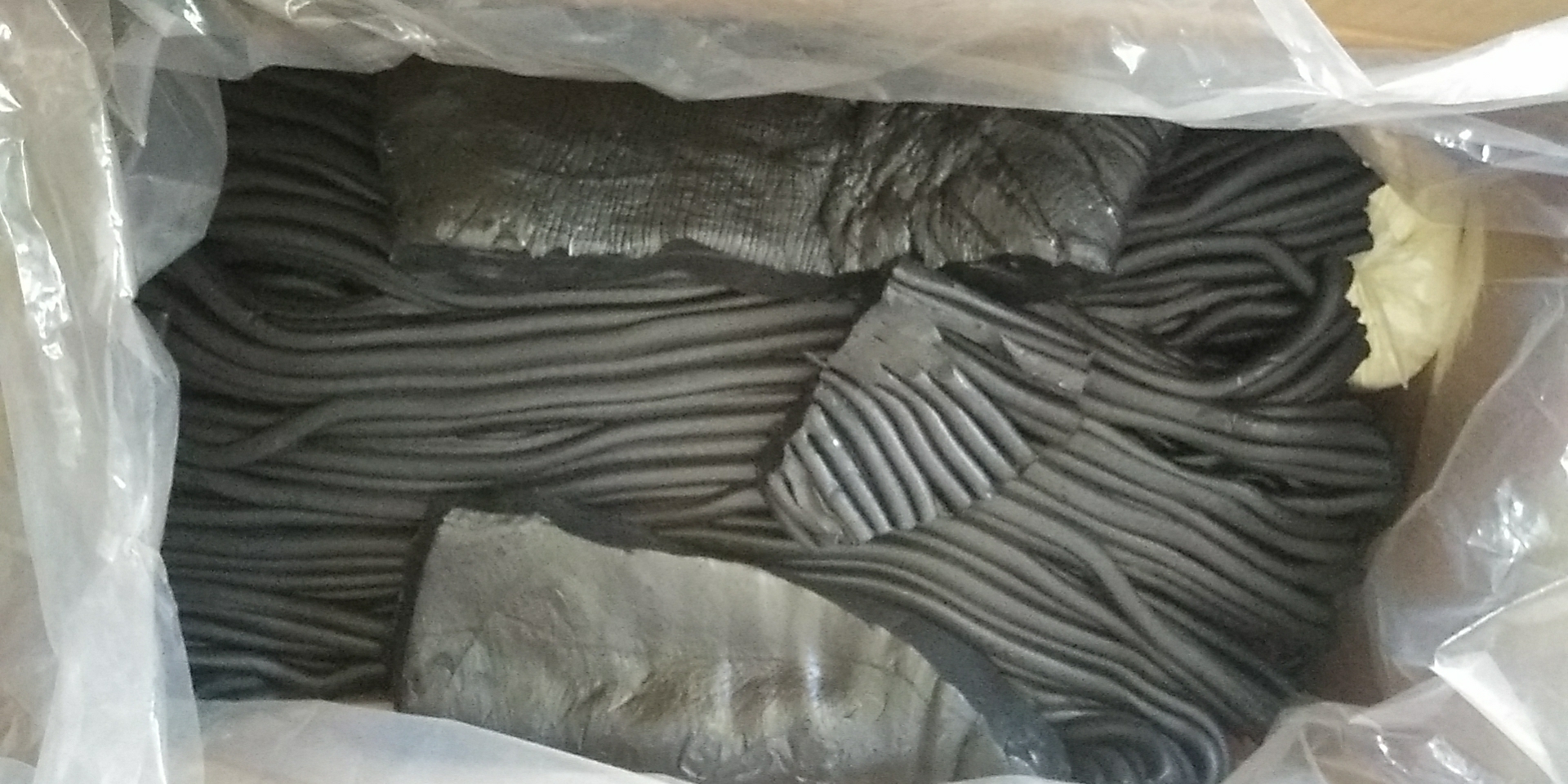
Rubber compounds are versatile materials that have become indispensable in modern industry. By blending base polymers with fillers, plasticizers, curing agents, and other additives, manufacturers can tailor mechanical, thermal, and chemical properties to meet specific needs. Rubber compounds are broadly classified into two main categories: natural rubber (NR) and synthetic rubber. Synthetic rubbers are further divided into general-purpose and specialty types. Each class exhibits unique characteristics that determine its suitability for different industries.
1. Natural Rubber (NR)
Derived from the latex of the Hevea brasiliensis tree, natural rubber is valued for its outstanding tensile strength, tear resistance, and elasticity. It also features excellent dynamic fatigue resistance and low heat build-up under cyclic loading. However, NR has poor resistance to oils, solvents, ozone, and UV radiation, and its performance degrades at high temperatures.
Applications: Natural rubber is widely used in tires for passenger cars, trucks, and aircraft, especially in sidewalls and treads where flexibility and resilience are critical. Other applications include conveyor belts, vibration dampers, rubber springs, adhesives, latex gloves, balloons, and footwear soles.
2. Synthetic Rubber – General-Purpose Types
General-purpose synthetic rubbers are designed to replace or complement natural rubber in high-volume applications, offering better resistance to aging, abrasion, or heat.
· Styrene-Butadiene Rubber (SBR): The most produced synthetic rubber, SBR offers good abrasion resistance, aging stability, and wet grip, though it has lower tensile strength and elasticity than NR. It dominates the tire industry (treads), as well as conveyor belts, hoses, gaskets, floor tiles, and shoe soles.
· Polybutadiene Rubber (BR): With exceptional abrasion resistance, low hysteresis (low energy loss), and high elasticity even at low temperatures, BR is often blended with NR or SBR to improve wear resistance. Its applications include tire treads and sidewalls, golf balls, conveyor roller covers, and impact modifiers for plastics.
· Butyl Rubber (IIR): Known for its outstanding impermeability to air and gases, combined with good damping properties and ozone resistance. IIR is indispensable in inner tubes, tire inner liners, curing bladders, pharmaceutical stoppers, and gas mask components.
3. Synthetic Rubber – Specialty Types
Specialty rubbers are engineered for extreme environments involving high heat, aggressive chemicals, fuel, or outdoor weathering. They command higher prices but enable critical applications.
· Nitrile Rubber (NBR): Excellent resistance to petroleum-based oils, fuels, and solvents, coupled with good mechanical properties across a wide temperature range (–35°C to +120°C). NBR is the standard for fuel hoses, oil seals, O-rings, gaskets, hydraulic hoses, gloves for chemical handling, and printing rollers.
· Chloroprene Rubber (CR – Neoprene): A balanced elastomer offering moderate oil resistance, good weather and ozone resistance, flame retardancy, and stable mechanical properties. CR is widely used in automotive belts (timing and serpentine belts), cable jackets, wetsuits, adhesive formulations, bridge bearings, and weather stripping.
· Ethylene-Propylene Rubber (EPM/EPDM): Outstanding resistance to heat (up to 150°C), ozone, UV, steam, and polar fluids, but incompatible with oils and fuels. EPDM dominates automotive cooling system hoses, weather seals, roofing membranes, electrical insulation, pond liners, and brake system components.
· Silicone Rubber (Q): With a service range from –60°C to +230°C (or higher for specialty grades), silicone rubber provides excellent flexibility, electrical insulation, biocompatibility, and resistance to corona discharge. It is used in medical tubing, implants, baby bottle nipples, baking mats, high-voltage insulators, aerospace seals, and keypad contacts.
· Fluoroelastomers (FKM, Viton®): The premium choice for extreme chemical and thermal resistance. FKMs withstand up to 250°C continuous and resist nearly all oils, fuels, acids, and solvents. Applications include aircraft engine seals, automotive fuel system O-rings, chemical plant gaskets, semiconductor manufacturing equipment, and oil drilling components.
4. Thermoplastic Elastomers (TPEs)
Though not conventional thermoset rubbers, TPEs combine rubber-like flexibility with plastic-like processability. TPEs are recyclable and require no curing. Common types include styrenic block copolymers (SBS, SEBS) and thermoplastic polyurethanes (TPU). They are used in soft-touch handles, automotive interior skins, medical device overmolding, shoe soles, and wire insulation.
Industry Overview
· Automotive and Transportation: The largest consumer of rubber compounds. Tires (NR, SBR, BR, IIR), hoses (NBR, EPDM), seals (FKM, NBR), belts (CR, EPDM), and vibration mounts (NR) all rely on specific rubber formulations to ensure safety, efficiency, and durability.
· Industrial Manufacturing: Conveyor belts (NR, SBR), rollers (NBR, PU), gaskets (various), hydraulic seals (TPU, NBR), and vibration isolation pads (NR) keep factories and machinery running.
· Aerospace and Defense: High-performance rubbers such as FKM and silicone are used for fuel system seals, hydraulic O-rings, thermal blankets, and cabin pressure seals, where failure is not an option.
· Medical and Healthcare: Silicone rubber and butyl rubber dominate this field for syringe plungers, vial stoppers, tubing, and wearable device straps due to their biocompatibility and sterilizability.
· Construction and Infrastructure: EPDM roofing membranes, CR window gaskets, NR bridge bearing pads, and silicone sealants provide weatherproofing, expansion accommodation, and longevity in buildings and civil engineering projects.
· Consumer Goods: Footwear soles (SBR, BR, TPE), sporting goods (golf balls, diving fins – NR/CR), household gloves (NR, NBR), and electronic device cases (TPE) showcase rubber’s versatility in everyday life.
Conclusion
The classification of rubber compounds into natural, general-purpose synthetic, specialty synthetic, and thermoplastic elastomers reflects the vast range of performance requirements across industries. From inexpensive SBR in car tires to expensive FKM in jet engines, each rubber compound is a carefully engineered material that contributes to safety, efficiency, and innovation. As new applications emerge in electric vehicles, renewable energy, and wearable technology, the development of advanced rubber compounds will continue to play a vital role in materials science and engineering.
Post time: May-14-2026